
Tesla's Roadster Flew Last Night. The Tesla Product That Matters for OpenWorld Is Bolted to a Garage Wall.
Tesla put compressed-air thrusters on a car and made it jump a Semi. OpenWorld's term sheet with Meridian is built on a far less glamorous Tesla product, the Powerwall, and it is the one that may end up doing real work for AI.
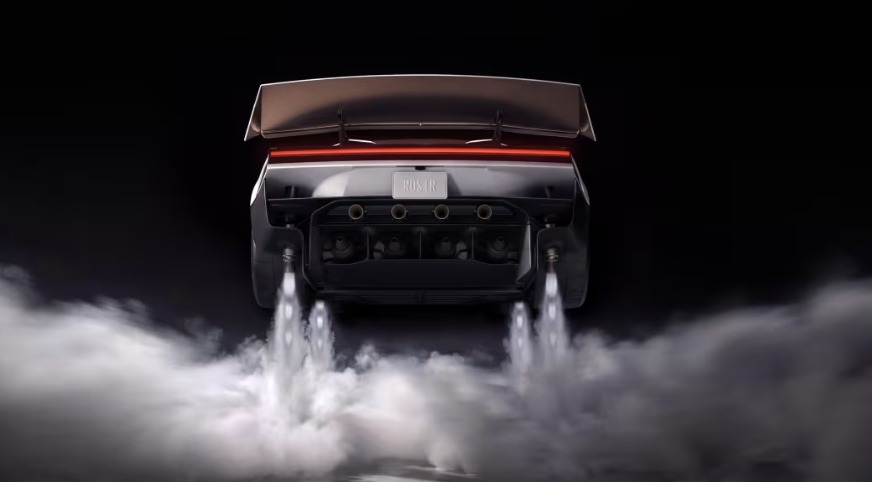
Tesla finally showed the new Roadster on Thursday night at SpaceX's rocket test site in Waco, Texas, two weeks later than planned. It drove up an inverted roller-coaster ramp, held on with a vacuum fan system, launched upside down, flipped, righted itself with cold-gas thrusters and landed. Then it jumped a row of Teslas, including a Semi. Elon Musk's review: “Well, it worked.”
The claims that followed were the kind only Tesla makes. A 0 to 60 run of 0.81 seconds at the event. A 230 mph top speed, with Musk floating Mach 0.5 for the production car. Three versions (Performance, Thrust, Rocket), one of them single seat with perimeter thrusters that Tesla implies can leave the ground for short stretches. Production in 2028. Deposits of $5,000 plus a $45,000 wire for Performance, $250,000 for Thrust, invite only for Rocket. No MSRP for any of them.
Hagerty's Henry Catchpole, who was in the room, called it “an incredible engineering achievement” and then added the obvious caveat: a usable road car remains to be seen. Deepwater's Gene Munster, a Tesla bull, went further on X: “an engineering flex with no commercial value beyond embarrassing traditional car makers.”
So: a remarkable car that does not ship for two years, cannot yet be legally flown anywhere, and has no price. That is the Tesla story everyone is sharing this morning.
The other Tesla product in the news this week
Twenty-four hours before the Roadster took off, OpenWorld, Inc. (Nasdaq: OPNW) announced a non-binding term sheet with Meridian to establish a tokenized financing program of up to $1 billion for a distributed AI computing network powered by rooftop solar and residential battery storage. The battery in that plan is the Tesla Powerwall. Meridian holds purchase rights to Powerwall systems for the program and will own the storage assets inside the structure.
The Powerwall is not going to trend. It does not flip. It is a white box on a garage wall that stores sunlight and gives it back after dark. It has been shipping since 2015 and it is, by any measure, one of the most proven products Tesla makes.
What the term sheet actually says
The plan, as laid out in the October 15 release:
- Up to $1 billion in tokenized financing. OpenWorld is advisor, structuring agent and services provider. The structure is built and administered on its OpenWorld Enterprise platform. Battery storage, solar panels and AI computing equipment form the asset base.
- Meridian's role. Meridian is a privately held Delaware LLC founded by Josh Raffaelli, a former Tesla board observer who was involved early in Tesla, SolarCity and SpaceX while at DFJ and Silver Lake. It holds purchase rights to Powerwall systems for the program and will own the storage assets.
- The network. Compute nodes at participating homes, with larger installations at local schools, hospitals and commercial campuses, each powered by on-site solar and battery storage. AI providers pay to run inference on it. No new centralized data-center sites, no new grid interconnections, no water-based cooling.
- Initial deployment of 10,000 homes. Homeowners get monthly hosting payments and lower-cost electricity, with household needs taking priority over computing workloads. Commercial hosts get a share of site revenue and backup power.
- Timeline. Initial installations scheduled for the fourth quarter of 2026. First commercial site targeted for the first quarter of 2027.
“Access to power is a major constraint on the growth of AI infrastructure,” said Matt Shaw, CEO and Chairman of OpenWorld. “By bringing computing equipment to homes and commercial properties through solar generation and battery storage, we can build AI capacity closer to the power source instead of waiting years for a grid connection.”
Raffaelli's line was shorter: “Residential battery storage is the foundation of this program.”
Why the garage beats the ramp
The AI buildout has one binding constraint right now and it is not chips. It is electrons, and specifically the years it takes to get a new data center connected to the grid. Every hyperscaler is in the same queue. OpenWorld's answer is to skip the queue by putting small amounts of compute where the power already is: behind the meter, next to a solar array, buffered by a battery that is already sold, already permitted, and already installed in the hundreds of thousands.
That only works if the battery is reliable, cheap to finance and available in volume. Which is why the hardware choice is a Powerwall and not something exotic. The Roadster shows what Tesla can do when cost and regulation do not matter. The Powerwall shows what Tesla can do when they do.
Think Starlink, applied to AI compute: the hardware goes on the customer's property, the customer gets paid, and the network gets capacity without building a single new site.
The caveats, plainly
The term sheet is non-binding except for a few stated provisions. It is subject to due diligence, definitive documentation and closing conditions, and OpenWorld says plainly there is no assurance it closes on these terms or at all. The $1 billion is a program ceiling, not money raised. Tesla, Inc. is not a party to the agreement; Powerwall is Tesla's product and trademark, and Meridian is the buyer. No AI inference customer has been named.
OPNW itself is three weeks old as a ticker. OpenWorld closed its merger with VerifyMe on September 30, started trading under the new symbol October 1, and has already announced a proposed up-to-$130 million IP-backed transaction with BeyondAI. A lot is moving at once for a small-cap.
What to watch
- Definitive agreements with Meridian, and any binding offtake with a named inference provider.
- The first installations in Q4 2026 and whether the first commercial site lands in Q1 2027 as targeted.
- How the tokenized financing is actually structured on OpenWorld Enterprise, and who buys it.
- Tesla's own energy numbers. Every Powerwall quarter is now, indirectly, an OpenWorld data point.
The Roadster will get the views this week. If you want to know which Tesla product is going to be doing paid work for AI in six months, look at the one that does not fly.